


Getting Our Children Learning Outdoors… and Why It’s So Vital



The team at Wild Things is leading the charge in demonstrating how outdoor learning can transform the lives of young people.
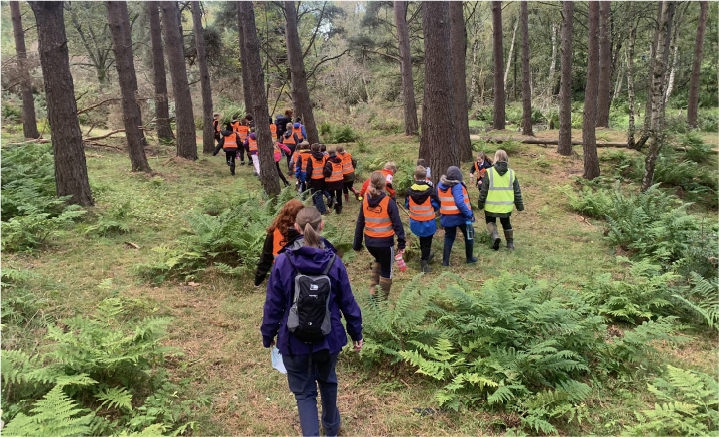
By taking learning beyond the classroom and into nature, Wild Things has seen significant improvements in focus, resilience, and social skills among participants. Practical activities such as bushcraft, woodland exploration, and team challenges create safe, inspiring environments where young people can thrive.
Evidence shows that outdoor learning reduces stress, boosts confidence, and fosters cooperation – qualities that directly help to reduce disruptive behaviour. For many young people, especially those who find traditional learning environments difficult, nature provides the space and freedom they need to succeed.
And after a call for more focus on outdoor learning from Gordonstoun head Peter Green this week, the discussion has been opened up once again.
Mr Green said: We are only now beginning to see the psychological impact of the Covid pandemic on our children, particularly the amount of time they spent indoors.
“While schools must have a range of options to deal with persistent and serious behaviour, it is important that we look at the wider education package being offered to children.
“We have a responsibility to not only teach children but to equip them for life after school, recognising that some of the most valuable education cannot be cultivated through classroom learning alone.” The Northern Scot
CEO Luke Strachan said: ”Our mission is to ensure that everyone, no matter their age or ability, can access Scotland’s stunning yet fragile natural habitats. Outdoor learning is not just for children people of all ages benefit from connecting with the wild. By nurturing curiosity for nature, we deepen our connection to the wildlife that surrounds us.”
Research by psychologists Dianne A Vella-Brodrick and Krystyna Gilowska found that being in nature can relieve stress and impact on behaviour.
“Nature has the potential to relieve cognitive overload, reduce stress and increase wellbeing – all factors that are conducive to learning. Examples of nature interventions include outdoor learning, green playgrounds, walks in nature, plants in classrooms and nature views from classroom windows.
“Experimental and quasi-experimental studies with comparison groups that employed standardised cognitive measures were selected, yielding 12 studies and results provide substantial support for cognitive benefits of nature interventions regarding selective attention, sustained attention and working memory.
“Underlying mechanisms for the benefits were also explored, including enhanced wellbeing, cognitive experiences to assist with relieving cognitive overload and stress and to optimise wellbeing and learning.
“Outdoor activities provide safe spaces where young people can develop teamwork, problem-solving skills, and self-confidence – qualities that directly reduce disruptive behaviour.”
Senior Policy Manager for Outdoor Learning and Learning for Sustainability at the Scottish Government Nathan Liddle says the Scottish Government recognises the benefits and value of outdoor learning for children and young people in Scotland
He said: “We want to see all children and young people having the opportunity to participate in a range of progressive and creative outdoor learning experiences.
“As you will be aware, Curriculum for Excellence empowers schools and practitioners to design and deliver the curriculum in ways that best suit the needs of their learners – this includes the use of outdoor learning, in all its forms.
“Outdoor learning also contributes meaningfully to our broader goals around Learning for Sustainability. That is why in our refreshed Learning for Sustainability Action Plan that published in 2023 we have committed to developing a new policy work-stream to continue to improve provision and access to quality outdoor learning and teaching experiences for all children and young people.”
Read up on our other news

Our new CEO – Holly Willmott
We are delighted to announce the appointment of Holly Willmott as our new Chief Executive Officer, marking an exciting new chapter as we prepare to celebrate our 25th anniversary. Holly,…
Read More
Our little explorers
A single piece of tree bark can be home to an entire miniature world! Tiny creatures such as beetles, spiders, woodlice, centipedes, springtails and even microscopic mites all use the…
Read More
The Hidden Worlds
Our amazing searchers found all sorts of fantastic things at the Hidden Worlds holiday club… we were looking for invertebrates, exploring with UV torches and kick sampling for invertebrates in…
Read More
READ MORE ABOUT WILD THINGS



We're grateful to all our funders


